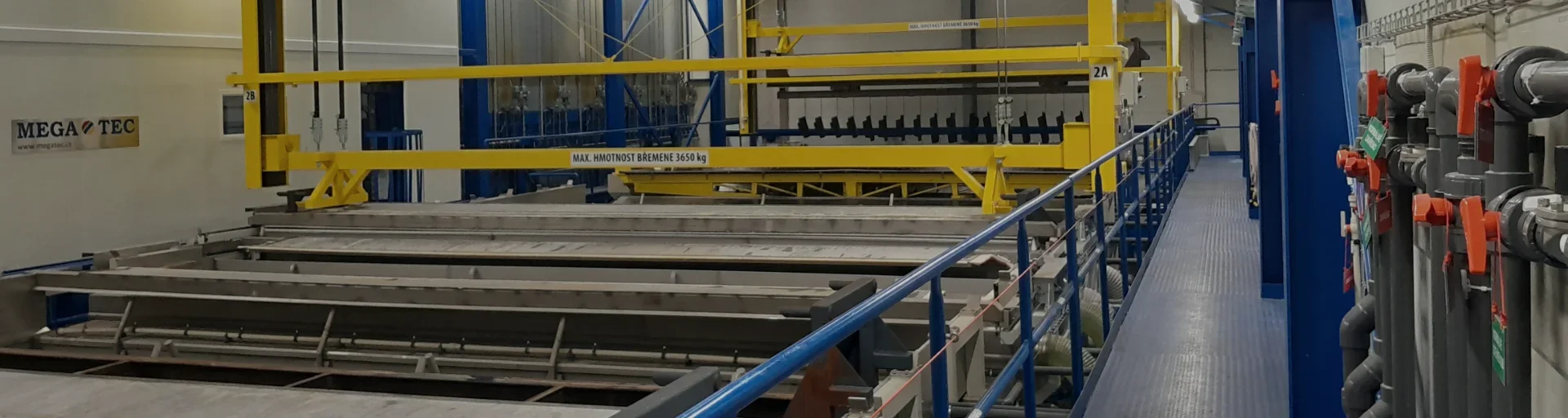
E-COAT Technologies by MEGA-TEC: Cataphoretic Painting Explained
If you need metal parts to withstand corrosion for years, simply painting them is not enough. Industrial coating must be uniform, consistent, and reliable, even on edges, corners, cavities, and complex geometries. This is exactly why many manufacturers relyon cataphoretic painting, which is commonly referred to as E-COAT or cataphoretic coating.
MEGA-TEC designs and delivers complete paint shops, focusing strongly on electrophoretic coating lines (E-COAT, ED coating). The company also supplies powder (PWD) and liquid coating lines (LQ), including related sub-deliveries.
As the only European manufacturer of electrophoretic membranes and the only global producer of all types of electrophoretic cells and with more than 30 years of experience in e-coat technology, we can offer customized solutions.
Beyond equipment delivery, MEGA-TEC supports customers throughout the life cycle of the line, including warranty and post-warranty service, line audits, and process optimization or intensification.
What is Cataphoretic Painting (E-COAT) and Why It Matters
The cataphoretic painting system is a highly economical and environmentally friendly coating method that represents one of the most advanced surface treatment technologies for metal products.
It is primarily used to protect steel components, as well as galvanized steel and aluminium parts, either as a primer or as a single-layer topcoat. Cataphoretic coating significantly improves the performance and durability of a wide range of products.
Typical Application Areas

E-COAT is a proven industrial standard in sectors where corrosion resistance, consistent quality, and high throughput are critical. Common application areas include:
- radiators and air-conditioning units,
- electrical equipment,
- metal furniture,
- building elements.
The Principle: How E-COAT Works
E-COAT is based on electrochemistry, and uses a controlled direct-current (DC) field in a paint bath. The core mechanism is as follows:
- The coated object is connected as a cathode in a DC field inside an electrolyte, which is an aqueous paint solution.
- Paint solution contains positively charged particles (cations), that are attracted to the cathode and deposit on the surface of the part.
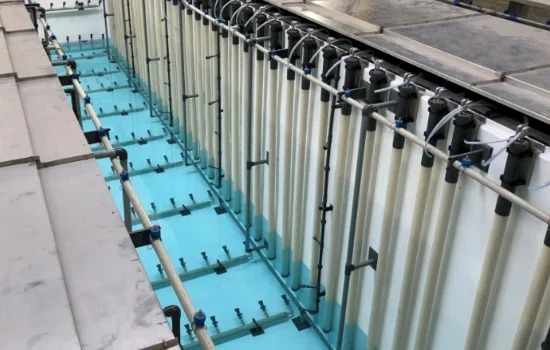
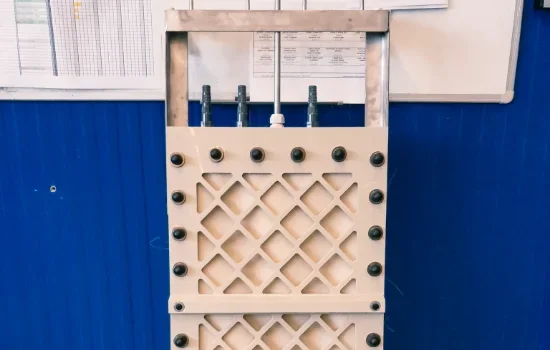
- Electrophoretic cells (EFCs), which can be flat, semicircular, or tubular, are connected as anodes and help maintain the equilibrium concentration in the paint bath.
One of the key reasons E-COAT delivers such uniform results is its “self-limiting” behavior:
- As the coating builds up, the electrical resistance of the layer increases.
- This naturally supports the formation of a highly uniform coating over the entire surface, including hard-to-reach areas such as edges, corners and cavities.
Typical coating thickness ranges from 15 to 45 μm. After deposition, the coating is polymerized (cured) in an oven between 160 °C and 180 °C.
Would you like to find out if E-COAT is suitable for your parts?
Let’s discuss your application and requirements.
5. 2. 2026


